How to Set Up Email Marketing Automation to Effectively Nurture Leads
December 4, 2025
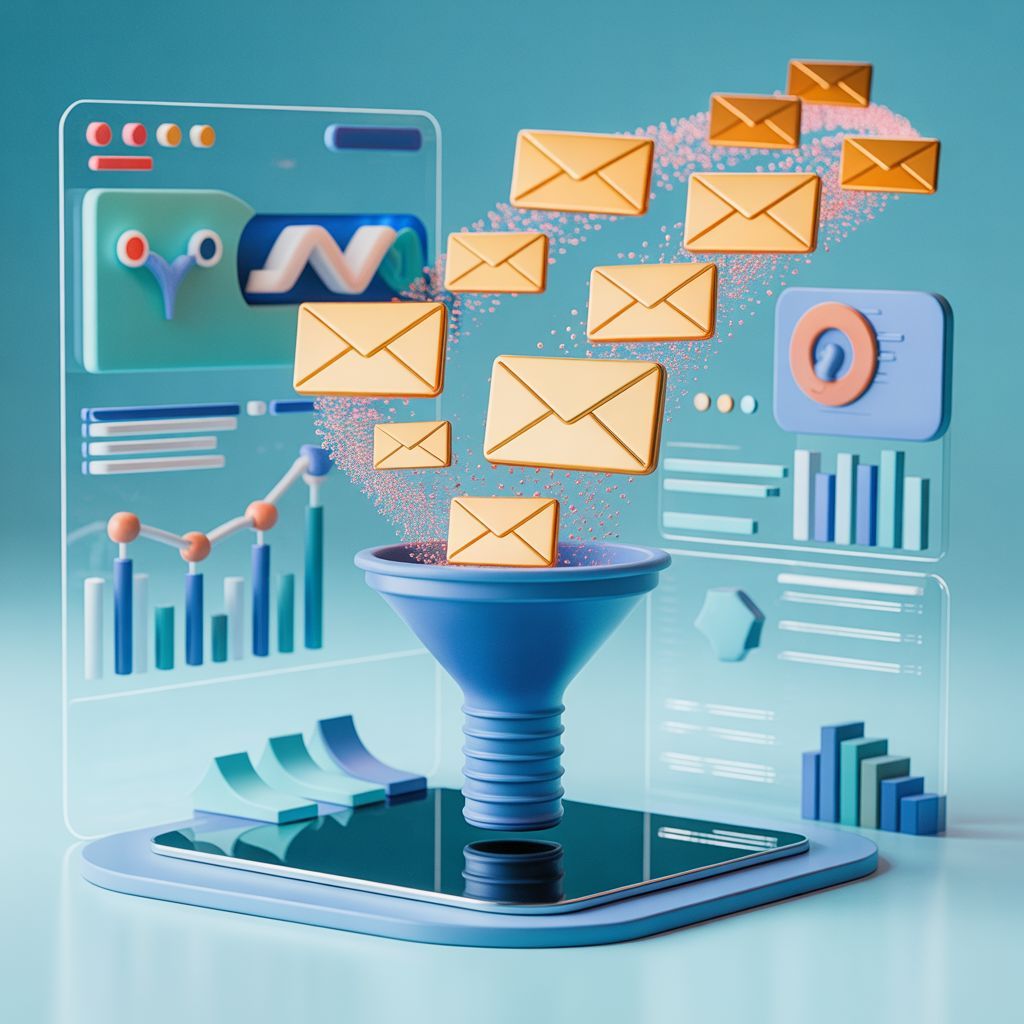
3D illustration of email envelopes flowing into a digital marketing automation funnel surrounded by analytics dashboards and data charts.

Email marketing automation allows you to send the right message to the right person at the right time, without lifting a finger. It's a powerful way to build relationships with potential customers by delivering personalized, relevant content directly to their inbox. By automating your email sequences, you can nurture leads effectively, save valuable time, and guide prospects smoothly through the sales funnel.


This guide will walk you through the essential steps to set up your email marketing automation and turn new leads into loyal customers.


Set Up Your Email Marketing Platform

First, you need a platform that supports automation. Popular choices like Mailchimp, HubSpot, and Constant Contact offer robust automation features suitable for businesses of all sizes. When choosing a platform, consider its ease of use, pricing, and integration capabilities.


Once you’ve selected a tool, integrate it with your website or Customer Relationship Management (CRM) system. This connection allows you to automatically sync new leads from contact forms, newsletter sign-ups, and other sources directly into your email marketing platform, making the entire process seamless.


Define Your Target Audience Segments

Not all leads are the same. Segmenting your audience allows you to send more personalized and effective emails. By dividing your contacts into smaller groups based on shared characteristics, you can tailor your messaging to their specific needs and interests.


Common ways to segment your audience include:

  • Demographics: Grouping by age, location, or job title.
  • Behavior: Segmenting based on how they've interacted with your website, such as pages visited or content downloaded.
  • Interests: Categorizing leads based on the topics they’ve shown interest in.

Examples of segments could be "New Subscribers" who just signed up, "Product Users" who have made a purchase, or "Inactive Leads" who haven't engaged with your emails recently.


Create Automated Email Sequences

With your audience segmented, you can create targeted email sequences, or "drips," designed to achieve specific goals.


Welcome Email Sequence

Make a great first impression with a welcome series for new subscribers. Use this sequence to introduce your brand, share valuable content, and set expectations for future emails. A typical welcome series might include three emails: one to welcome them, a second to share your most popular resources, and a third to highlight your core products or services.


Lead Magnet Delivery Sequence

If someone signs up to receive a lead magnet like an ebook or template, your first automated email should deliver it immediately. Follow up with a few more emails that provide additional content related to the topic of the lead magnet. This reinforces your expertise and keeps your brand top-of-mind.


Sales or Product Launch Sequence

Use email automation to build excitement for new products or special offers. This sequence should focus on the benefits and features of the product, include testimonials, and create a sense of urgency to encourage purchases.


Re-engagement Sequence

Win back inactive subscribers with a re-engagement campaign. This sequence can offer a special discount, ask for feedback, or simply remind them of the value your brand provides. If they don't re-engage after a few emails, it may be time to remove them from your list to maintain good list hygiene.


Personalize Your Emails

Personalization can dramatically improve your email performance. Go beyond just using the recipient's name. Use dynamic content to tailor your emails based on their interests, past purchases, or behavior. For example, you could show different product recommendations to different segments or reference a blog post they recently read.


Track and Analyze Your Results

To understand what’s working, you need to track your performance. Monitor key metrics like open rates, click-through rates, and conversion rates for each of your automated campaigns. Most email platforms provide detailed analytics to help you see how your sequences are performing.


Use A/B testing to optimize your emails. Test different subject lines, calls-to-action (CTAs), and content to see what resonates most with your audience. Continuous testing and refinement will help you improve your results over time.


Start Nurturing Your Leads Today

Email marketing automation is an invaluable tool for nurturing leads and driving growth. By setting up targeted, personalized email sequences, you can build stronger relationships with your audience and guide them effectively toward a purchase.


Ready to put these strategies into action, but not sure where to start? Our team at Strate-go specializes in creating sophisticated digital marketing strategies that deliver results. 


Request a free consultation today, and let's transform your lead nurturing process together.


January 1, 2026
Selecting the right technology stack is one of the most critical decisions a business owner makes. The market is flooded with marketing automation tools, but three names consistently rise to the top: Mailchimp, ActiveCampaign, and HubSpot. Each platform offers distinct advantages depending on your company's size, budget, and goals. At Strate-Go Digital Marketing Agency , we understand that software is not a one-size-fits-all solution. Your choice of platform can determine how effectively you connect with your audience and drive sales. This guide explores the key features of these three industry leaders to help you decide which one aligns best with your digital marketing strategy. Mailchimp: The creative starter Mailchimp is often the first name that comes to mind when people think about email marketing. It built its reputation on being user-friendly, colorful, and accessible for beginners. For many small business owners, Mailchimp is the perfect entry point into the world of digital communication. Key features and benefits Mailchimp excels at design and simplicity. Its drag-and-drop builder allows you to create visually stunning emails without writing a single line of code. Ease of use: You can set up an account and send your first campaign in minutes. Creative templates: It offers a wide variety of pre-designed templates that look professional on any device. Basic automation: You can set up simple welcome sequences and abandoned cart emails to recover lost sales. Free plan: Their "forever free" plan is generous enough for startups with smaller lists to get started without overhead costs. Best use cases Mailchimp is best suited for freelancers, startups, and creative businesses that prioritize newsletters and visual storytelling. If your primary goal is sending beautiful emails to a relatively small list, this is a strong contender. ActiveCampaign: The automation powerhouse If Mailchimp is the friendly entry point, ActiveCampaign is the tool for businesses ready to scale. It is widely regarded as the leader in automation capability. This platform moves beyond simple emails and focuses heavily on the customer journey and logic-based workflows. Key features and benefits ActiveCampaign shines when you need to send the right message to the right person at the exact right time. Advanced automation: The visual workflow builder allows you to create complex sequences based on user behavior, such as clicking a link or visiting a specific webpage. Built-in CRM: It includes customer relationship management (CRM) features designed for small to medium businesses to manage their sales pipeline. Lead scoring: You can assign points to contacts based on their engagement, helping your sales team focus on the hottest leads. High deliverability: ActiveCampaign consistently ranks high for ensuring emails actually land in the primary inbox rather than the spam folder. Best use cases This platform is ideal for e-commerce businesses, B2B companies, and savvy marketers who need robust segmentation. If you want to automate your follow-up processes and nurture leads based on their specific actions, ActiveCampaign is the superior choice. HubSpot: The all-in-one giant HubSpot is more than just an email tool; it is a comprehensive ecosystem for growing businesses. It connects marketing, sales, content management, and customer service into one unified platform. This integration eliminates the need for juggling multiple logins and disparate data sources. Key features and benefits HubSpot offers a depth of functionality that is hard to match. Its primary strength lies in its ability to align marketing and sales teams around a single source of truth. Powerful CRM: The HubSpot CRM is the core of the platform and is free to use. It tracks every interaction a contact has with your brand. Content hub: You can host your website, blog, and landing pages directly within HubSpot for seamless tracking. Sales enablement: It offers tools for meeting scheduling, document tracking, and sales automation to help close deals faster. Scalability: As your business grows, HubSpot grows with you, offering enterprise-level features for large teams. Best use cases HubSpot is perfect for scaling companies and mid-sized organizations that want to consolidate their tech stack. It is the go-to solution for businesses heavily invested in inbound marketing and content creation. Choosing the right path for your growth There is no single "best" tool, only the tool that is best for your current stage of growth. Mailchimp offers a fantastic starting point for creative simplicity. ActiveCampaign provides the engine for businesses ready to automate their growth. HubSpot delivers a complete ecosystem for teams that need marketing and sales alignment. Navigating these choices can be tricky, but you do not have to do it alone. At Strate-Go Digital Marketing Agency, we specialize in building sophisticated strategies that yield incredible outcomes. Whether you need help setting up your automation or driving traffic to your new funnel, our team of 26 expert marketers is here to help. Ready to transform your marketing results? Contact Strate-Go today for a free consultation and let us help you build a strategy that works.
A diverse marketing team analyzing data charts and brainstorming A/B testing strategies
November 6, 2025
Discover how A/B testing can help you optimize your marketing budget for maximum ROI. Learn practical testing strategies from Strate-go.
Illustration of marketers discussing social media strategies for Instagram, Facebook, TikTok, etc
October 6, 2025
Master Instagram, Facebook, TikTok, and LinkedIn with these proven tactics. Get real engagement and grow your business on social media.
Digital marketing team analyzing social media data on futuristic screens, representing 2025 mdia.
October 6, 2025
Discover the best social media strategies for small businesses in 2025. Learn how to choose the right platforms, create engaging content, and grow your brand online.
Illustration of a digital marketing funnel showing website visitors converting into leads withC TA
August 27, 2025
Boost conversions with 10 proven techniques. Learn how to turn website visitors into qualified leads using CTAs, landing pages, and lead magnets.
A focused marketing professional reviews a digital sales funnel on dual screens.
July 4, 2025
Learn how to build a high-converting lead funnel that attracts, nurtures, and converts prospects into loyal customers. This step-by-step guide from Strate-Go covers proven strategies, tools, and tips to boost your lead generation and sales performance.
By info July 19, 2021
There are so many good reasons to communicate with site visitors. Tell them about sales and new products or update them with tips and information.
By info July 19, 2021
Write about something you know. If you don’t know much about a specific topic that will interest your readers, invite an expert to write about it.